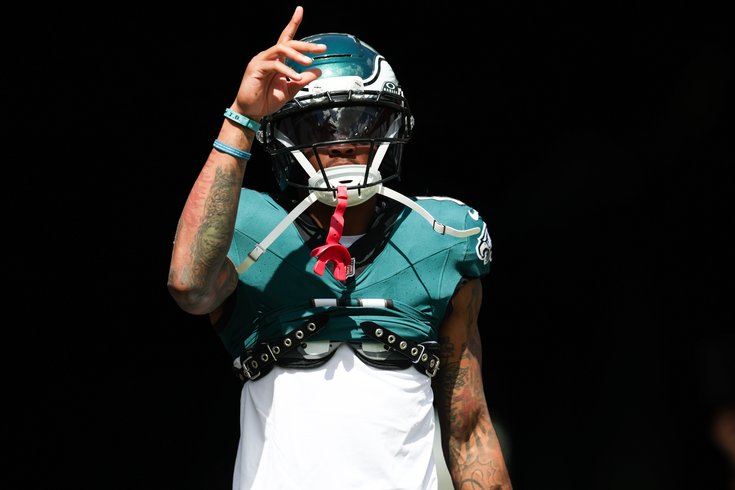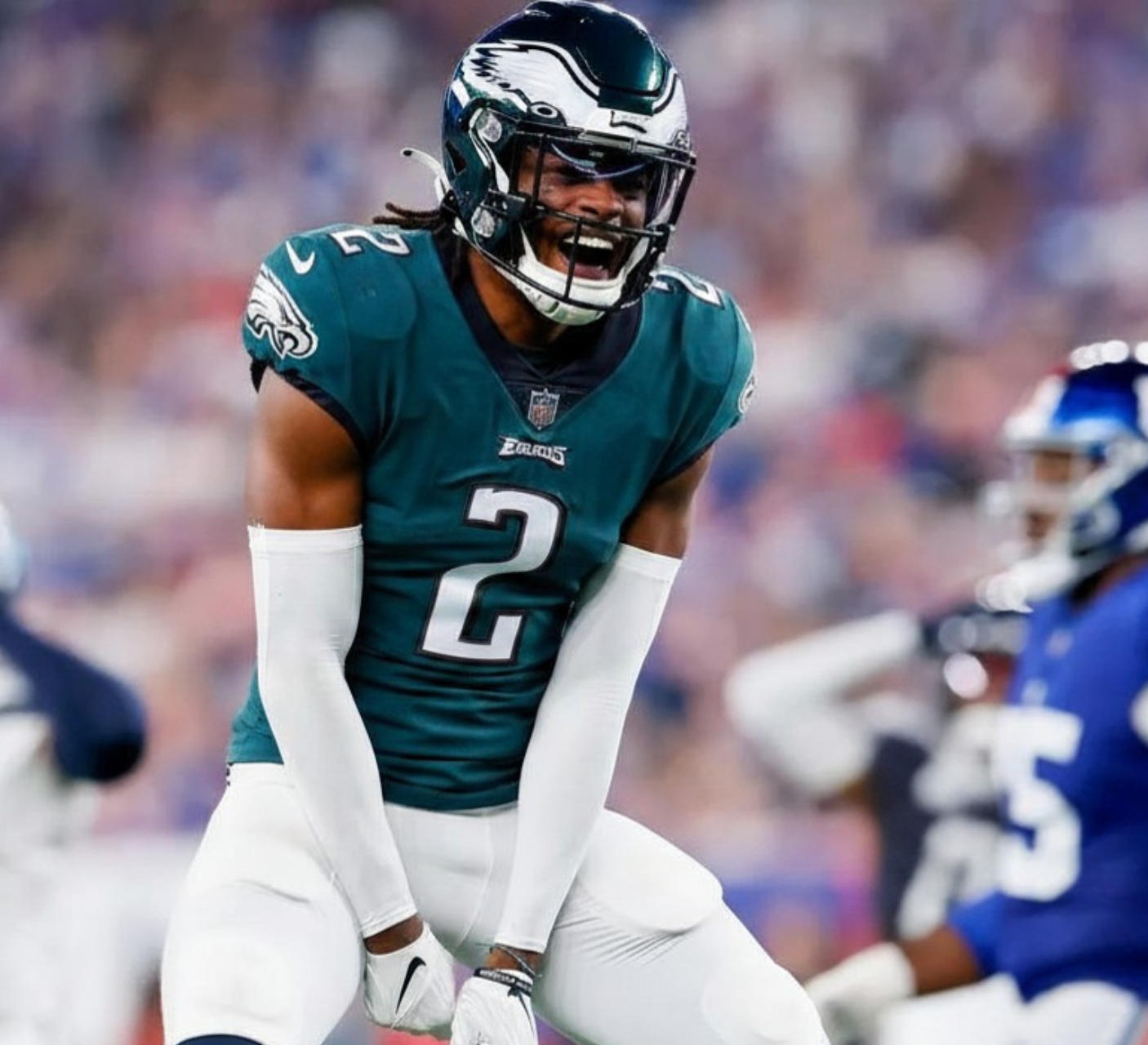
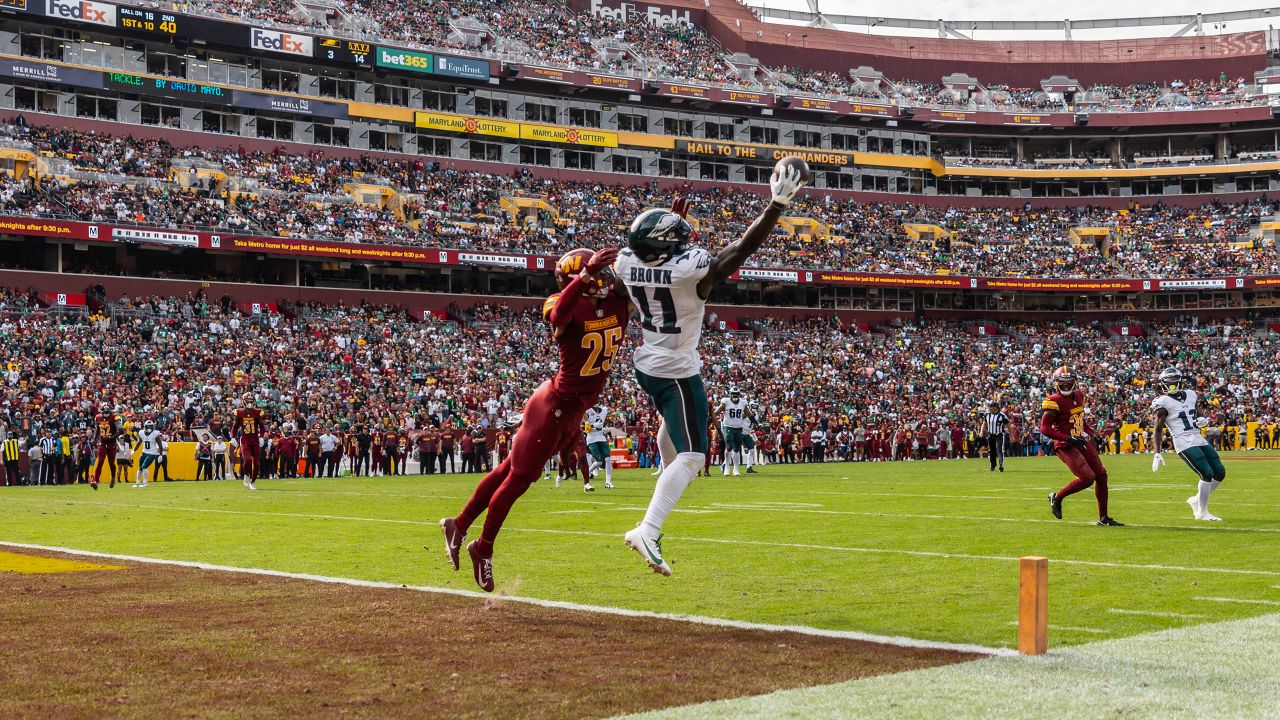
The A.J. Brown trade is barely 24 hours old and the national grade column has already arrived. CBS Sports said the Eagles "failed to land the coveted 2027 first-round pick." Bleacher Report ran the "who got the better of this deal" question with Patriots fans clearly winning the comments. Sports Illustrated graded Philadelphia in the B-minus range and called New England the clear winner.
The takes share a premise: Howie Roseman should have gotten more. A 2027 first instead of a 2028 first. A higher mid-round pick instead of a fifth. Something that more obviously signaled "the Eagles fleeced the Patriots."
The takes are wrong. Here's the actual math behind the call Roseman made.
1. The 2027 first was never going to happen
The premise of the criticism is that Roseman could have gotten a 2027 first if he'd held the line. He couldn't have. Ian Rapoport reported on May 28 that the Patriots were "not willing" to give up a first-round pick at all, period, and that the two sides were "not particularly close" precisely because of that gap. The 2027 draft is widely regarded as a deeper-than-usual class, and New England, with Drake Maye on a rookie deal and a roster still in the rebuild lane, was not going to deal that pick into a trade for a 28 year old receiver coming off his lowest production year as an Eagle.
Roseman pushed. The Patriots said no. The choice in front of him was a 2028 first and a 2027 fifth, or no trade at all and a $43 million dead cap hit dropped into 2026's books. He took the future pick. That's not failure. That's reading the room.
2. A 2028 first is a 2028 first
The reflexive "meh, that's two years away" reaction misses what kind of asset this actually is. A first-round pick in any year is a top-32 selection at a player's lowest possible cost. The Eagles right now are paying Jalen Hurts, Saquon Barkley, Jordan Mailata, Lane Johnson, Landon Dickerson, and Zack Baun on premium veteran money. Jalen Carter is about to step into a 30 million dollar-a-year extension. Jihaad Campbell, Quinyon Mitchell, Cooper DeJean, and Cam Jurgens are all on rookie deals that will be up by the time that 2028 pick is on the clock.
That's exactly when a top-32 rookie wage scale piece becomes the most valuable asset in a roster, because the second contract wave is going to wipe out cap space and the team will need cheap impact replacements. The 2028 first is the right pick at the right time for the team Roseman is actually building.
3. The cap saving is the immediate value
The other thing the grade pieces gloss over: this trade saved the Eagles $7 million in 2026 cap space and split the dead money over two years. Pre-June-1 the trade would have meant a $43.4 million single-year hit. Post-June-1, that became $16.3 million in 2026 and $27.1 million in 2027. That's not a small detail. That's the difference between Roseman having room to extend Jalen Carter in November versus having to wait an entire year.
Treat the trade like a single transaction and the grade is fair. Treat it like one move inside a roster-building system and the grade misses the entire picture.
4. Brown's market value was not what the takes assume
The grade pieces are pricing A.J. Brown like the 2022-2023 version: 1,496 yards, 106 catches, two consecutive 1,400-yard seasons. That player would have demanded a 2027 first plus a day-two pick. That player would have had multiple teams in the bidding.
The Brown the Patriots traded for is 28 years old, coming off his lowest production season as an Eagle (1,003 yards), with two more years and 50 million dollars left on his deal, and one of two NFL franchises (the Patriots, because of the Vrabel relationship and the cap room) actually willing to take him. The market was thin, and the player has more miles on him than the rear-view-mirror narrative suggests. Roseman extracted a future first in a thin market for a receiver in his late prime on a top-three contract. That's a win.
5. The receiver room is already rebuilt
This is the part that has been mostly under-covered. The Eagles spent the 2026 offseason explicitly preparing for life after Brown. Drafted Makai Lemon at pick 20. Signed Hollywood Brown for the speed/field-stretching role. Traded for Dontayvion Wicks from Green Bay. Signed Elijah Moore for slot depth. Re-confirmed DeVonta Smith as the alpha.
The volume of investment said a year ago what the trade said yesterday: this team was moving on whether the trade market cooperated or not. Roseman didn't lose A.J. Brown because he had to. He moved on because the rest of the roster was already built to absorb it.
6. Roseman's track record
Howie Roseman traded a third-round pick and a fourth-round pick for Darius Slay. He drafted Jalen Hurts in the second round when the team had Carson Wentz. He acquired Saquon Barkley on a cap-friendly deal that became one of the best signings in modern NFL history. He drafted DeVonta Smith, Jalen Carter, Quinyon Mitchell, Cooper DeJean, and Makai Lemon in five drafts. He won Super Bowl LIX last season.
National grade columns from people who write 30 articles a week on every team in football don't carry the same weight as the GM who has been right about Philadelphia football for a decade and just won a Lombardi seven months ago. When Roseman makes a trade that doesn't look optically perfect on draft-grade Twitter, the default assumption should be that he knew what he was doing.
The bottom line
The A.J. Brown trade was not the splashy one-for-a-2027-first deal national pundits wanted to write up. It was the structurally correct deal for a team trying to stretch a Super Bowl window across the next two seasons while preparing for the next contract cycle.
Cap relief. A future first. A receiver room already rebuilt. Roseman traded the player when the market was at its peak, took the best return that market would actually pay, and pocketed the financial flexibility to keep extending the championship core.
That's not a B-minus. That's just what good front office work looks like when you measure it by what actually helps the team win again, not by what looks loud on a trade-grade column.