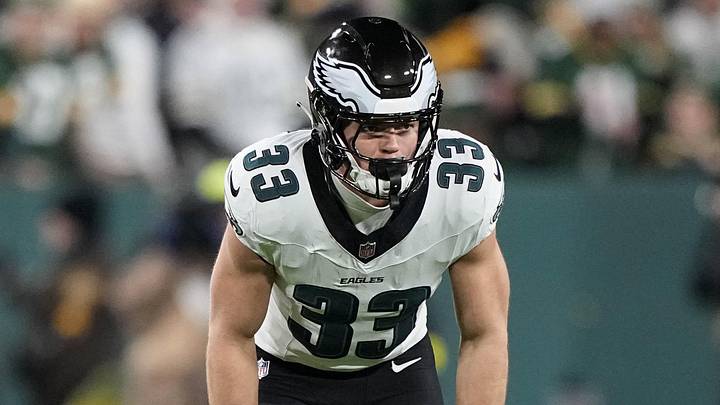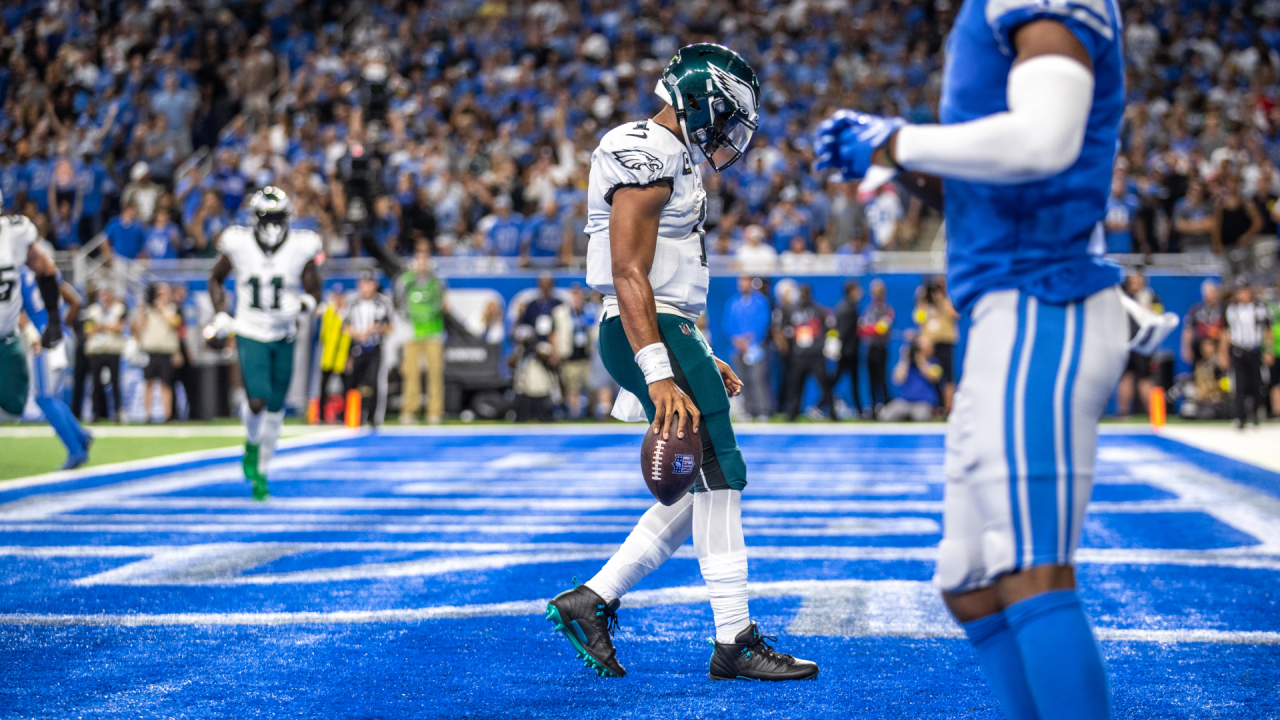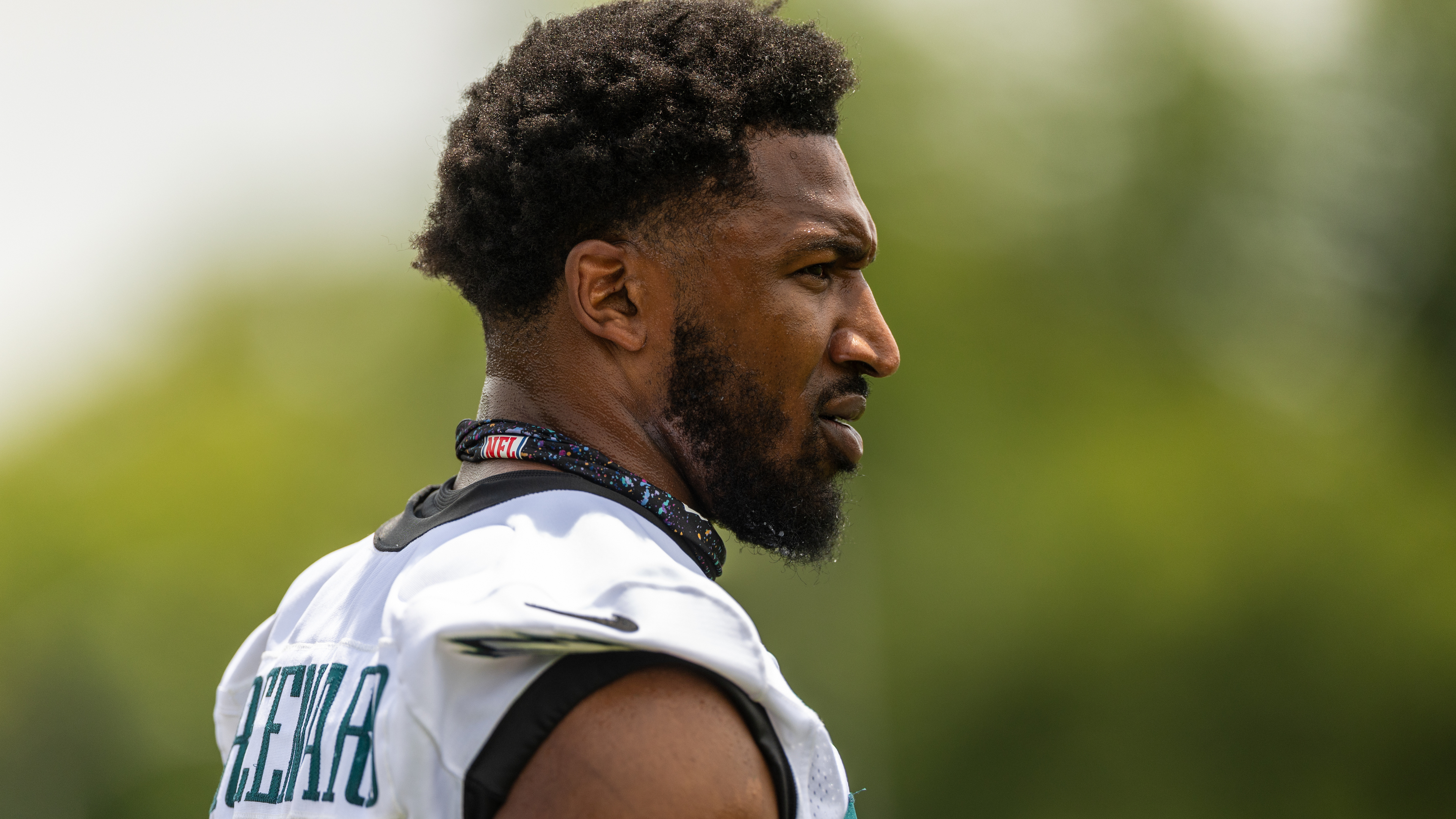
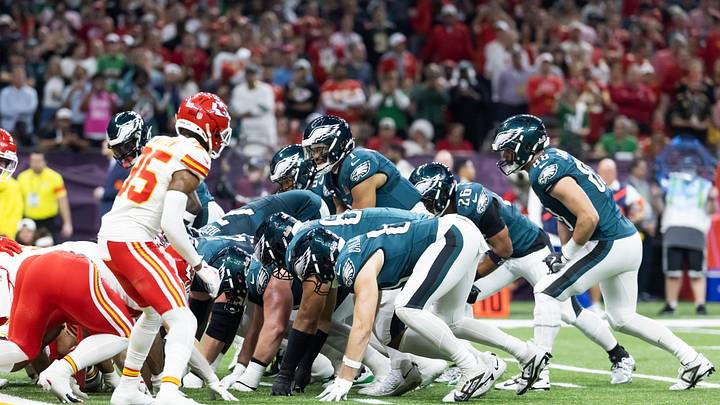
The Philadelphia Eagles ran the tush push 108 times across the 2022-2025 seasons. They converted it at 96.6 percent success rate in 2025, the highest in the NFL. The league average for the same play is 84.8 percent. Buffalo is the only other team to crack 89 percent. The Eagles have scored 27 of the league's 52 total tush-push touchdowns since 2022.
The play has been the subject of three different NFL competition committee proposals in three years. The most recent (March 2025) saw 22 owners vote for a ban — two votes short of the 75 percent supermajority required. The play remains legal for 2026. Roger Goodell himself reportedly favors removing it. The vote count is creeping closer to the threshold every year.
The Eagles, meanwhile, have leaned into it. Six tush-push attempts against Kansas City in Super Bowl LIX. Multiple short-yardage and goal-line packages built around it. A coaching staff that publicly defends it as football, not a cheat code.
This is the deep dive on why the play works for Philadelphia at a rate that no other team has approached, what the mechanical and personnel advantages actually are, and where the play goes from here.
The Numbers: Eagles vs Everyone Else
Per Pro Football Focus, BetMGM, and the league-wide Tush Push Tracker:
- Eagles 2025 tush push success rate: 96.6%
- NFL average tush push success rate: 84.8%
- Buffalo Bills tush push success rate (only other team above 85%): 89.5% (51-of-57)
- Eagles tush push attempts since 2022: 108 (34% of the entire league's 316)
- Eagles tush push touchdowns since 2022: 27 of the league's 52 (52%)
- Eagles career conversion rate since 2022: 87%
- Rest of NFL career conversion rate: 71%
The gap between the Eagles and the rest of the NFL is roughly 16 percentage points. To put that in context: that is the difference between a college backup QB completion percentage and an NFL Pro Bowl QB completion percentage. It is not a normal performance gap. It is the kind of gap that only emerges when one team has solved a specific football problem and no other team has.
The Mechanical Breakdown: 5 Things the Eagles Do Differently
1. The Snap-to-Push Timing
The tush push starts with Cam Jurgens (formerly Jason Kelce) firing the ball to Jalen Hurts at speed and force. Jurgens' snap is harder, faster, and more rhythmic than the league average. This matters because Hurts has to absorb the ball, set his hands on the football for control, and brace his body for the push behind him in the same instant.
The push is timed to Hurts' brace, not to the snap. Saquon Barkley (and previously Boston Scott / Kenneth Gainwell) push at the moment Hurts' shoulders go forward, not when the snap fires. Other teams push too early or too late and the QB stalls.
2. The Personnel Specificity
Jalen Hurts is the second-strongest pure squat athlete in the NFL among QBs (behind only Lamar Jackson by some testing reports). His college lifts at Oklahoma included a 500-pound back squat. His ability to generate leg drive from a 3-point stance is the foundational mechanical advantage.
The push players matter equally. Saquon Barkley at 233 pounds with explosive lower-body power and Dallas Goedert at 256 pounds as a tight-end push player generate more horizontal force than the running back / tight end combos most other teams use. The Eagles also use Jordan Mailata pulling from the backside of the line on certain variations, adding a 6-foot-8, 365-pound mass to the push.
3. The Offensive Line Synchronization
The other four offensive linemen do not collapse the pocket. They specifically aim for downward leverage and forward push at the snap. Lane Johnson, Landon Dickerson, and Mailata combine to absorb the defensive front's initial push backwards while the wedge of pushers behind Hurts generates the forward momentum.
What separates the Eagles version: the timing of the second-effort drive. After the initial 18-24 inches of forward push, the line stays low and drives again. This is Stoutland coaching from 2022-2025 (now Chris Kuper continuing the install in 2026).
4. The Defensive Pre-Snap Read Exploitation
The Eagles know what defenses do against the tush push: the front line goes for ball-disruption (trying to strip the ball at the snap), the defensive backs cheat down to fill gaps if Hurts breaks free, and the linebackers try to time the snap to jump the line. The Eagles' rhythm is calibrated to defeat exactly these adjustments.
The Eagles run the tush push without any deception. Everyone in the stadium knows what is coming. The play still works because the mechanical execution is better than any defensive scheme can stop on a single snap.
5. The Repetition Advantage
The Eagles practice the tush push more than any team in the league. Jeff Stoutland built it into multiple weekly practice scripts under Doug Pederson. Sirianni has continued the practice volume. Chris Kuper is inheriting the install with no expected change.
Other teams attempt to copy the play but do not practice it at Philadelphia's frequency. The Bills (Josh Allen at 245 pounds with similar squat strength to Hurts) practice it most among the rest of the league and get to 89.5%. Every other team gets to 80-85% because they do not commit to the rep volume.
The Defensive Counters That Have Been Tried
Across four years of trying to stop the tush push, defenses have attempted:
- The submarine attack: Defensive linemen dive low at the snap to disrupt Hurts' leg drive. Result: occasional success at displacing Hurts, but mostly creates piles that he can fall forward into for the yard.
- The high gap-fill: Linebackers attack the A-gap and B-gap from a stand-up position to clog the push lanes. Result: 60-70% conversion rate against these looks, still well above what a normal QB sneak averages.
- The wrap-and-rip: Defenders try to wrap up Hurts' arms to force a forward fumble. Result: 0 fumbles on tush pushes since 2022. Hurts' ball security is elite.
- The illegal defense: Some defenders intentionally jump offside to negate the play and reset the down distance. Result: 5-yard penalty, but the play comes back.
- The off-tackle stunt: Trying to penetrate from the C-gap to disrupt the push lane. Result: rarely tried because it leaves the middle of the field open if Hurts cuts back.
None of these counters have produced a sustained Eagles failure rate above ~10 percent. The play is currently NFL-unsolvable.
The Ban Debate: Where the NFL Stands
The case for banning the tush push, per the proponents:
- Player safety: the play creates pile-up situations that resemble rugby scrums more than American football, with claims that injury risk is higher than for normal short-yardage runs
- Competitive fairness: only one team has cracked it at elite efficiency, which means a single team has an asymmetric structural advantage on a critical down
- Aesthetic concerns: the play is described by critics as not real football, more like a rugby maul
The case against banning, per the Eagles and other supporters:
- Player safety data does not actually show elevated injury rates on the tush push specifically
- The play has existed in some form (QB sneaks with backfield pushers) for decades; the Eagles just optimized it
- Banning a successful, legal play because one team executes it best sets a bad precedent for offensive innovation
- If other teams want to be better at it, they can practice it more
The 2025 vote was 22 owners for ban, 10 against, with 2 abstentions. The 24-vote threshold for ban approval was 2 short. The 2026 offseason did not produce another vote, but the issue is expected to return in 2027.
What Happens If The Play Gets Banned in 2027
The Eagles would lose approximately 8-12 points per season directly attributable to tush push conversions on goal-to-go and 3rd-and-1 situations. That math (conservatively) is the difference between a 12-5 season and an 11-6 season. Across an 8-year career, removing the tush push from Hurts' personal stat line would cost him approximately 50 rushing touchdowns. He currently has 63 career rushing TDs, of which an estimated 35 are tush push conversions.
The play getting banned would also remove the Eagles' biggest structural short-yardage advantage. The team's offensive design has been built around the assumption that 3rd-and-1 / 4th-and-1 / goal-line-from-the-1 are 95%+ conversion opportunities. Without the tush push, they revert to league-average conversion rates and have to redesign their goal-line packages.
The financial and roster impact: smaller. The play does not require special personnel that the Eagles couldn't redeploy elsewhere.
The Verdict
The tush push is the most efficient short-yardage play in NFL history, by a wide margin. The Eagles execute it at a level no other team has matched because they invested in the rep volume, the personnel specificity, and the mechanical timing that the play requires.
The play is legal for 2026. It will likely be a competition committee topic again in 2027, and the ban-vote count is creeping toward 24. Sometime in the next 2-3 NFL offseasons, the rule probably changes.
Until then, the Eagles run the most reliable short-yardage play in football. Defenses know it is coming. They still cannot stop it. That is the modern Eagles' on-field identity in one snap.