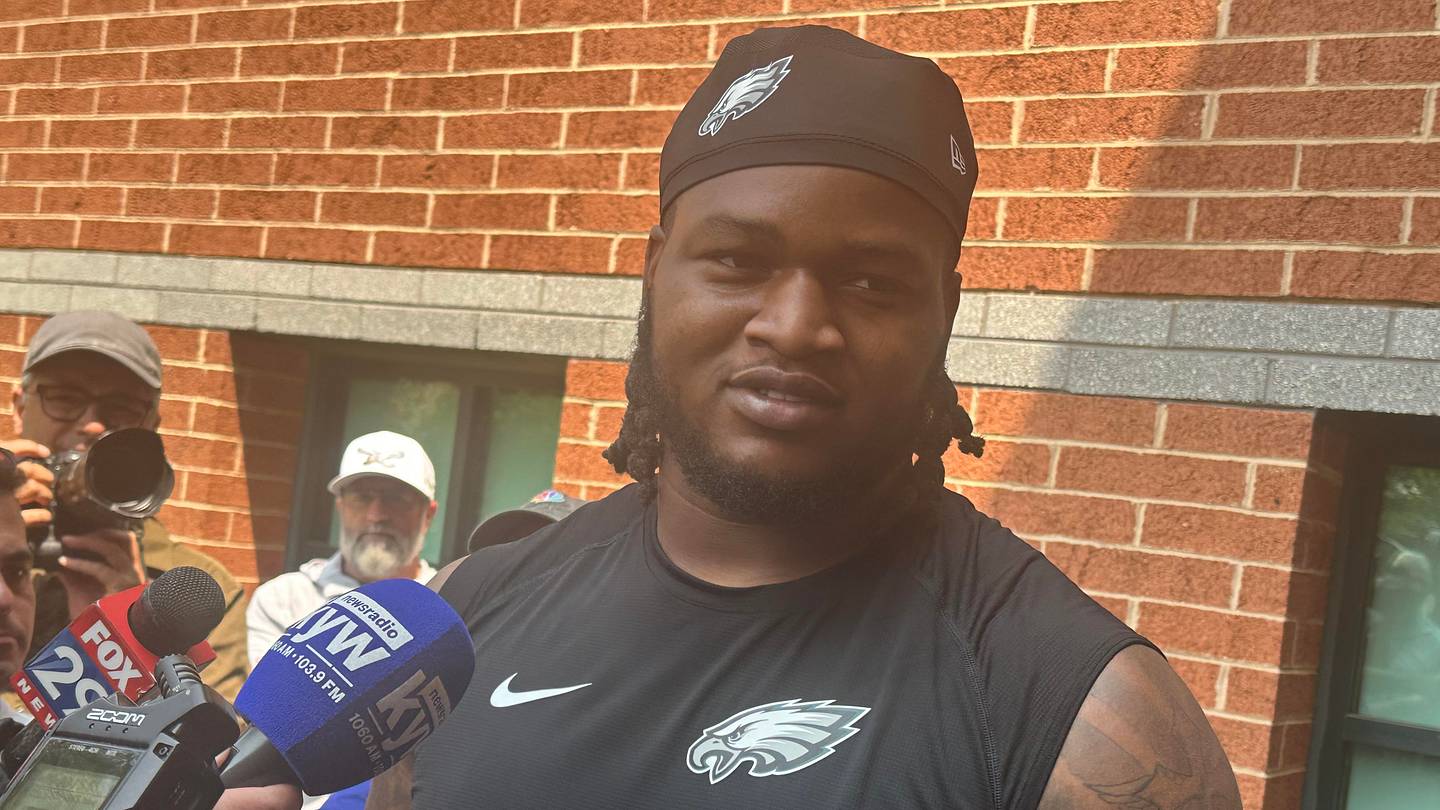
The Jalen Carter situation has officially moved from rumor to news. The 25-year-old Pro Bowl defensive tackle has begun what is increasingly called a "hold-in" with the Philadelphia Eagles: showing up to mandatory minicamp, getting credit for attendance, then standing on the sideline through team drills while his agent, Drew Rosenhaus, works toward a long-term extension. Sports Illustrated's John McMullen reported on Sunday that the front office is proceeding with deliberate caution on a deal that, if completed, would reset the interior defensive line market entirely.
What a Hold-In Actually Is
A hold-in is the modern alternative to a true holdout. The mandatory minicamp fine structure under the current CBA is severe (over $50,000 per missed day, plus mandatory loss of accrued seasons in some scenarios), so players who want leverage but do not want to lose money or accrued time show up to the facility, attend meetings, participate in walk-throughs, and then refuse to take meaningful team reps. The team cannot fine them. The player keeps the leverage. The negotiation continues.
That is what Carter is doing right now. He was at the Jefferson Health Training Complex through both days of mandatory minicamp. He participated in individual drills. He did not take a single team-period rep. Nick Sirianni dodged direct questions about Carter's status on Wednesday, only saying that Carter "was working on individual scenarios."
The Market Carter Is Trying to Reset
Interior defensive line contracts have moved fast in the last 18 months. The current top of the market is dominated by 3-techniques in their late 20s. The relevant comps:
- Chris Jones (Kansas City): ~$31M per year average
- Quinnen Williams (NY Jets): ~$24M per year
- Dexter Lawrence (NY Giants): ~$22.5M per year
Carter and Rosenhaus are reportedly aiming at a deal in the $32 million to $35 million per year range. That is the headline number. It would make Carter the highest-paid interior defensive lineman in NFL history at age 25, on a deal that runs through his entire prime.
The case for it is straightforward: two Pro Bowls in three NFL seasons, a Super Bowl ring, dominant snap volume on the championship run (he played more interior defensive line snaps than any other Eagle in the 2024 postseason), and three more years of upside before he is even a year removed from his rookie deal.
Why the Eagles Are Being Cautious
The Sports Illustrated reporting from McMullen on Sunday lays out the two concerns the Eagles have on Carter's side of the negotiation: health and maturity.
Health: Carter dealt with a shoulder issue through portions of the 2024 and 2025 seasons. The injury never knocked him out for extended stretches, but it is real, and front offices that are about to commit $32M-plus per year want full medical clarity. The Eagles have been doing their due diligence on the shoulder status this offseason, and there is reason to believe they want more information before signing.
Maturity: This is the more delicate concern. Carter is an elite player when locked in. He has also had multiple off-field incidents during his time at Georgia and one notable in-game incident as an Eagle. The front office is trying to assess whether the off-field profile is something that will trend in the right direction with a record-setting payday, or whether it represents a risk. Top-of-market contracts have very little wiggle room for off-field disruption.
Howie Roseman's pattern with extensions is well-documented: he extends his own homegrown stars early when the evidence is overwhelming (Mailata, Smith, Hurts, Brown all got their second contracts a year before they had to). The fact that Carter is in his fourth year and the Eagles are still being patient is itself a signal. They are not in a hurry.
The Rosenhaus Pressure
Drew Rosenhaus is one of the most experienced agents in the league at orchestrating hold-ins and getting deals done. He represents a long list of Eagles players past and present (including Brandon Graham historically). The Rosenhaus playbook in these scenarios is consistent: produce the leverage moment in late spring, threaten to extend the hold-in into training camp, and force the team to make a decision before camp opens in late July.
That is the timeline that matters now. If a deal is not done by the time training camp opens, the hold-in either escalates (Carter staying off team reps in camp) or de-escalates (Carter returns under his existing contract while talks continue). Either is possible. Both come with risk to the team.
What Sirianni Did Not Say
The head coach was asked directly about Carter's participation status at the Day 2 minicamp press conference. He did not call it a hold-in. He did not address the contract talks. He gave the answer of a coach who has been told to stay out of it.
"You know, right now I've been able to work some individual scenarios, you know, an individual practices and that's where he's at this point in the offseason.", Nick Sirianni
That is coach-speak for: the front office handles this, I coach the players who are on the field, my job is to be neutral. The fact that Sirianni did not push back on the hold-in framing or insist Carter would be at camp is telling. Coaches who think a contract issue is on the verge of resolving sound different than coaches who do not.
What Happens Next
The Eagles break until training camp opens in late July. The window for getting a deal done before camp is six weeks. Three scenarios from here:
- Deal gets done before camp. Carter signs at $32-35M per year. The Eagles lock in their best young defender for the next 5-6 years. Howie Roseman wins the offseason. This is the cleanest outcome.
- Hold-in extends into camp. Carter shows up in late July, attends meetings, refuses to practice. The story dominates a week of training camp coverage, the pressure builds, and a deal eventually gets done. This is the more uncomfortable version.
- No deal, Carter plays out his fourth year. The Eagles let the situation drift through 2026 (Carter is signed through this year on his rookie deal anyway). Both sides bet on the 2026 season clarifying the medical and maturity questions. This is the riskiest path for the team because Carter has every reason to be cautious about injuries on a one-year-left contract.
The most likely outcome is some version of the second scenario. The deal gets done, but late, and there is some camp drama on the way there. Carter is too good to alienate. The Eagles know it. The market is what it is.
The question for the next six weeks is whether the front office is willing to be the team that resets the interior defensive line market. The answer they give will determine the entire 2026 defense.