The 2024 Philadelphia Eagles defense was statistically the best unit in the NFL. It allowed 17.8 points per game during the regular season, held the Patrick Mahomes Kansas City Chiefs to 22 points in Super Bowl LIX, and produced first-team All-Pros at three position groups. It is, by any honest reading, the second-greatest Eagles defense ever assembled, behind only the 1991 Buddy Ryan unit.
So when the question gets asked, "is the 2026 defense going to be better?," the right answer requires position-by-position math. Let us do it.
The Defensive Line
2024: Jalen Carter (sophomore season), Jordan Davis, Milton Williams, Brandon Graham, Josh Sweat, Bryce Huff, Nolan Smith.
2026: Jalen Carter (contract year), Jordan Davis, A.J. Epenesa, Jonathan Greenard, Nolan Smith, Jalyx Hunt, Uar Bernard, Moro Ojomo.
Verdict: 2026 is deeper, 2024 was more star-driven.
The 2024 unit had elite veteran star power: Brandon Graham in his final season was the emotional centerpiece, Josh Sweat had a Pro Bowl-caliber regular season, and Milton Williams was the breakout star (then he left in free agency to the Patriots). The 2026 unit replaces Sweat and Williams with Jonathan Greenard (former Vikings free agent, a more proven pass rusher than 2024 Williams was at that point) and A.J. Epenesa (24 career sacks across 6 NFL seasons, depth piece). The starting talent is comparable. The depth is meaningfully better.
The wild card: Jalen Carter in Year 4 with extension money on the line. The leap from his 2024 production (6 sacks) to his ceiling (12-15 sack range) would more than offset any decline elsewhere.
DL edge: 2026, narrowly.
Linebacker
2024: Zack Baun (career year, 11 sacks, 151 tackles, AP All-Pro), Nakobe Dean, Oren Burks, Devin White (depth).
2026: Zack Baun, Nakobe Dean, Jihaad Campbell (Year 2 after 2025 rookie season), Oren Burks.
Verdict: 2024 was peak Baun.
Zack Baun's 2024 season was one of the greatest single-season LB performances in Eagles history. 11 sacks. 151 tackles. AP All-Pro. He was unblockable on blitz packages and elite in coverage. Asking him to replicate that exact season at the same level in 2026 is asking a lot. Even a slight regression (8-9 sacks, 130 tackles) would be a different impact on the defense.
The counter: Jihaad Campbell in Year 2. The 2025 first-round pick had a solid rookie season as the 4-3 weakside backer; Year 2 jumps for LBs at his position are usually significant. If Campbell goes from "solid" to "good," the unit is back to even with 2024.
LB edge: 2024, slightly.
Cornerback
2024: Quinyon Mitchell (rookie), Darius Slay, Avonte Maddox, Eli Ricks.
2025: Quinyon Mitchell, Cooper DeJean (rookie), Darius Slay was released early, Isaiah Rodgers.
2026: Quinyon Mitchell (All-Pro), Cooper DeJean (All-Pro), Riq Woolen (free agent from Seattle), Avonte Maddox.
Verdict: 2026 is significantly better.
This is the position where 2026 lapses 2024 entirely. The 2024 Eagles' Week 1 starting CB tandem was Mitchell (rookie) and Slay (33 years old). The 2026 starting CB room is three first-team All-Pro-caliber players in their primes (Mitchell, DeJean, Woolen) on a defensive coordinator who specifically loves to rotate corners.
Quinyon Mitchell's 2025 catch-rate-allowed of 42.4 percent (the lowest by any NFL corner in a single season since 2021) is the kind of leap from rookie to sophomore that you cannot manufacture. Adding Woolen at 6-foot-4 gives the unit a physical archetype that 2024 did not have at all. The Week 1 CB room in 2026 is the best Eagles CB room since Asante Samuel / Sheldon Brown / Joselio Hanson in 2008.
CB edge: 2026, by a significant margin.
Safety
2024: Reed Blankenship, C.J. Gardner-Johnson (traded mid-season to Houston).
2026: Marcus Epps OR Michael Carter II (open competition), Reed Blankenship signed with Houston in March free agency.
Verdict: 2024 was clearly better.
This is the position where 2026 is unambiguously worse. The Eagles let Reed Blankenship walk to Houston for $24.75M over three years (a fair number that the Eagles could have matched and chose not to). The replacement competition is Marcus Epps (a Sirianni-trusted veteran who has been a starter before) vs. Michael Carter II (a former Vic Fangio favorite who has been impressive in OTAs).
Epps or Carter II is going to be worse in 2026 than Blankenship was in 2024. The hope is that the rest of the secondary (specifically Cooper DeJean's slot dominance and Riq Woolen's outside range) compensates by reducing the amount of high-leverage work the safeties have to do.
Safety edge: 2024.
The Coordinator
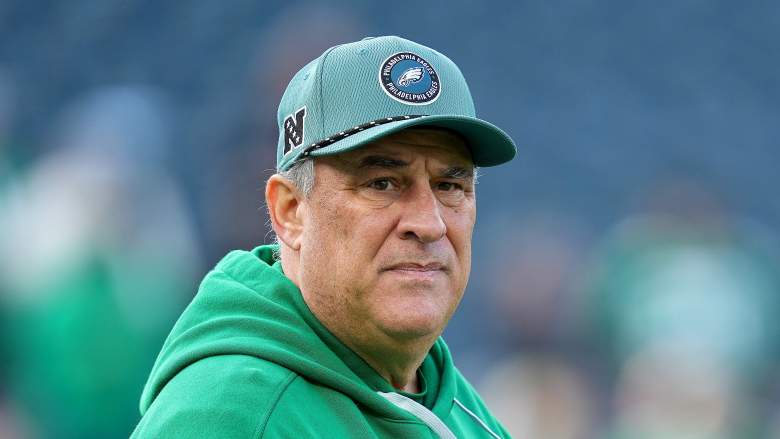
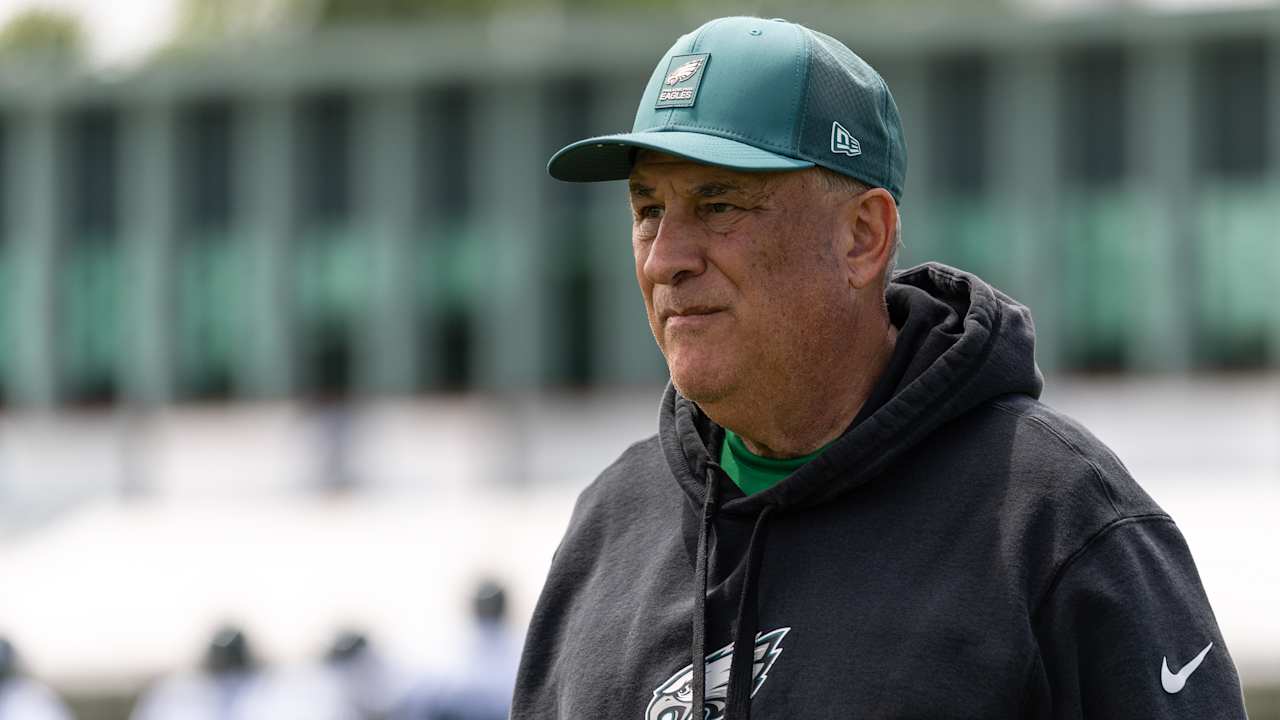
2024: Vic Fangio in Year 1.
2026: Vic Fangio in Year 3.
Verdict: 2026, clearly.
Fangio's scheme is famously install-heavy and benefits enormously from year-over-year continuity. The players who learned the scheme in 2024 had to learn it from scratch. The same players in 2026 have two full seasons of operating in it. The disguises get tighter. The post-snap rotations get smoother. The blitz timing improves. This is exactly the reason teams retain coordinators: continuity compounds.
Plus Fangio just won the 2026 PFWA Dr. Z Award for lifetime achievement. He publicly committed to the Eagles for two more years. He has stability and he has runway.
Coordinator edge: 2026, no contest.
The Position-by-Position Scorecard
| Position | Winner |
|---|---|
| Defensive line | 2026 (narrowly) |
| Linebacker | 2024 (slightly) |
| Cornerback | 2026 (significantly) |
| Safety | 2024 (clearly) |
| Coordinator continuity | 2026 (no contest) |
The Verdict
The 2026 Eagles defense should be better than the 2024 Eagles defense, but not because of star talent. It should be better because of:
- Coordinator continuity. Year 3 of Fangio's scheme with mostly the same core players will produce tighter execution than Year 1 did. This is the single biggest factor.
- Cornerback depth. The Mitchell-DeJean-Woolen trio is meaningfully better than the Mitchell-Slay-Maddox trio of 2024. CB performance has outsize impact on team defensive efficiency.
- Pass rush depth. The Greenard / Nolan Smith / Hunt / Epenesa rotation behind Carter is the best EDGE depth chart Fangio has had in Philadelphia.
The 2026 defense is at a disadvantage at safety (losing Blankenship) and slightly at linebacker (replicating peak Baun is hard). But the math says the gains outpace the losses, and the year-over-year continuity at coordinator amplifies every gain.
The 2024 defense was great because it was peaking at the right moment. Carter took a leap. Mitchell was a Day 1 starter as a rookie. Baun had a once-in-a-decade season. Williams broke out before walking in free agency. Fangio assembled it all in his first attempt. Some of those moments were stars aligning.
The 2026 defense will be great because it is engineered. The coordinator knows his guys. The guys know the scheme. The depth chart has three layers at every position group instead of two. The cap math is efficient enough to keep the entire core intact through 2027.
The answer to the title question: yes, the 2026 defense should be better than the 2024 Super Bowl defense, but the margin is closer than fans want to believe. The 2024 unit had peak players in peak years. The 2026 unit has more depth and more continuity but less individual star variance. It is a more reliable elite defense. It might not have a Baun-2024 moment, but it should have fewer bad weeks.
That is what good front offices build over time: less variance, more floor. The 2026 Eagles defense is the most engineered version Fangio could have built. Week 1 will be the first real test.