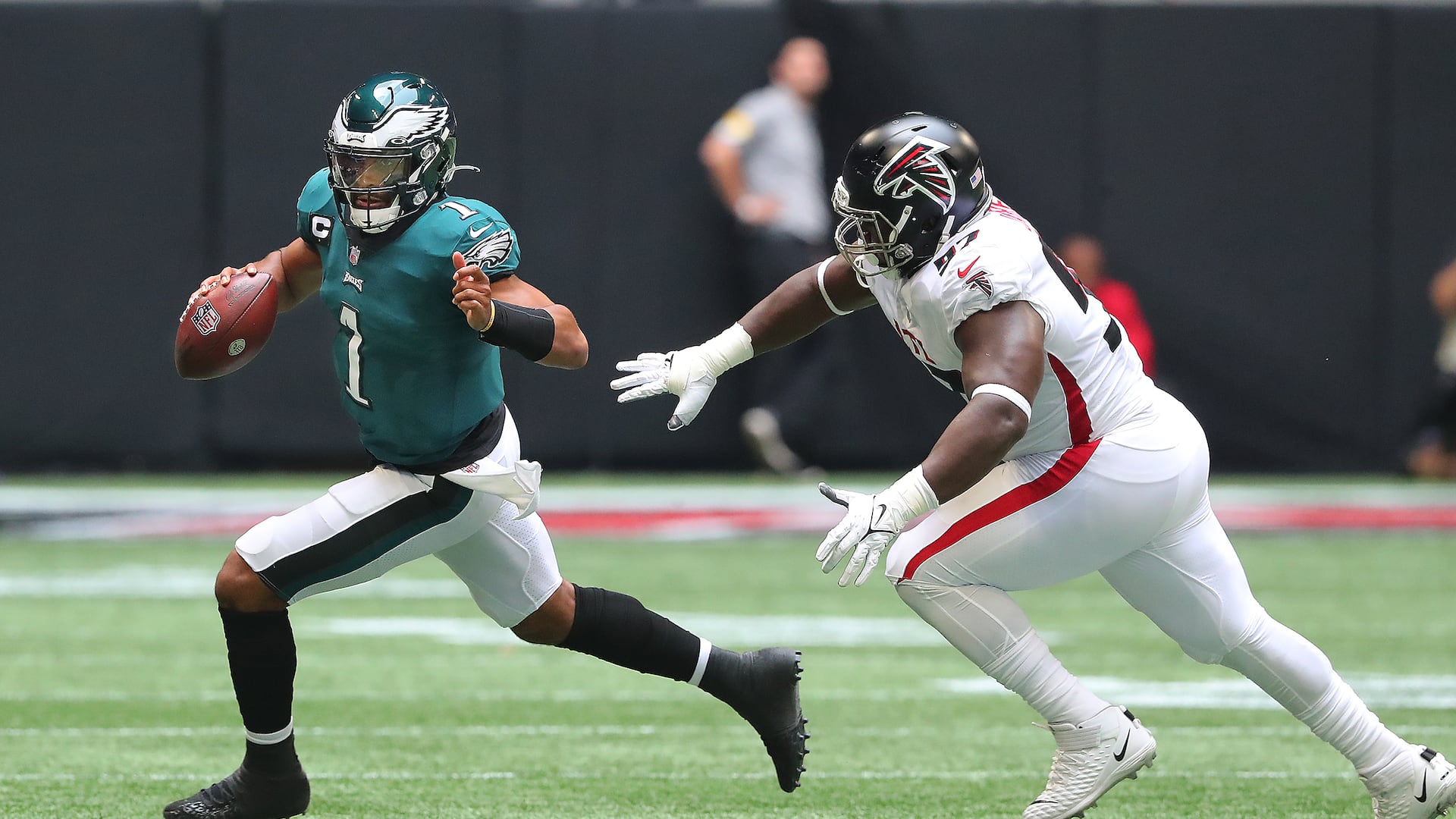

Remember when the Eagles' secondary was a weakness? It was not that long ago. Pre-2024, the Eagles regularly fielded patchwork cornerback groups, cycled through aging veterans, and watched opposing offenses target the back end of their defense as the soft spot of the roster. Those days are over.
Philadelphia now boasts one of the youngest and most talented defensive backfields in the NFL, and the transformation happened in just two offseasons.
The 2024 Draft Reset
The transformation started with the 2024 NFL Draft. The Eagles used a first-round pick on Quinyon Mitchell, the Toledo cornerback whose combination of speed, instincts, and tackling translated immediately to the NFL. They followed up with a second-round pick on Cooper DeJean, the Iowa defensive back whose hybrid nickel/safety/slot profile made him a Day 1 contributor in sub packages.
Both players started as rookies. Both were significant contributors on the Super Bowl LIX championship run. Both enter 2026 having logged a full Pro Bowl-level season as a Year 2 player. That is the kind of draft outcome that resets a defensive depth chart for a decade.
The Riq Woolen Addition
This offseason, the Eagles added another piece: cornerback Riq Woolen, acquired from the Seattle Seahawks for a fourth-round pick. Woolen is 6-foot-4 with elite length and ball skills. His rookie season in Seattle produced six interceptions and put him on the Pro Bowl track before injuries and inconsistency slowed his development.
For the Eagles, Woolen is a low-cost buy on a player whose ceiling remains one of the highest at the position. He gives Vic Fangio a third starting-caliber outside corner alongside Mitchell and DeJean. That kind of three-deep starting CB group is rare in modern football.
The Safety Room
The safety depth chart looks similar. Marcus Epps provides veteran leadership as a returnee to the room he played in during Sirianni's first season. Andrew Mukuba, the 2025 second-round pick out of Texas, showed flashes as a rookie and enters Year 2 with the chance to claim a starting spot. Rookie Cole Wisniewski adds the kind of hybrid linebacker-safety profile that Fangio's two-high system rewards.
It is not the most decorated safety room in the league, but it is the deepest the Eagles have had in years.
The Fangio Effect
None of this happens without Vic Fangio. The coordinator's scheme is built around versatile defensive backs who can play multiple coverages, disguise looks pre-snap, and tackle in space. Mitchell, DeJean, and Woolen all fit the profile. So do the safeties. The scheme makes good players look great because it puts them in position to use their skills.
It is no coincidence that the secondary's transformation lines up with Fangio's arrival as coordinator. The roster moves and the scheme work together.
The Numbers Tell the Story
The 2024 defense allowed one of the lowest opponent passing-yardage rates in football on the way to the Super Bowl LIX championship. The 2025 defense was even better in some advanced metrics, though the team's overall results were weighed down by offensive inconsistency. The trajectory is clear: this is no longer a defense being held up by its front seven. It is a complete unit, with the secondary as a strength rather than a liability.
The 2026 Outlook
The cornerback room now stacks four players who could start on most NFL teams (Mitchell, DeJean, Woolen, Ringo). The safety room has experience and youth blended together. The Fangio scheme keeps producing top-tier results. Whoever the Eagles draft to back up these players will be coming into one of the best defensive-development environments in football.
The Bottom Line
Two years ago, the Eagles were desperately searching for cornerback help. They invested first-round and second-round picks on the same draft day and hit on both. They added Woolen this offseason. They retained their Fangio scheme. They have flexibility to rotate, match physically with any receiver group in the league, and develop younger players behind the starters.
The secondary is no longer a liability. It might be a strength. The transformation is complete.